Clean Your Pellet Grill or It Will Lie to You: The Firepot Routine That Keeps Your Smoker Honest
My ThermoPro logged 247°F in the firebox while the display insisted we were holding a perfect 225°F. That was the first cook after I skipped a deep clean for six weeks. The auger was working, the fan was spinning, but the ash had packed the firepot so tight the pellets were smoldering instead of burning.
This is how fires start. I've been keeping a logbook of every single cook for twenty years, and I can tell you exactly which smoker failures trace back to a dirty firepot.
Most of them. If you're not cleaning your pellet grill's firepot every three or four cooks, you're not maintaining a smoker, you're rolling dice.

Kona 360 Clean Grill Brush
Scrapes ash and carbon off the firepot walls without scratching the steel, and the curved head...
Not a degreaser, so you still need a separate spray for the drip tray
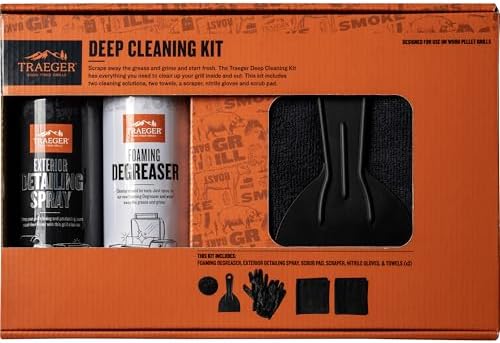
Traeger Deep Cleaning Kit
Complete exterior detailing kit with the right brushes and sprays for the outside of the cabinet
Doesn't touch the firepot, which is the part that actually matters for safety
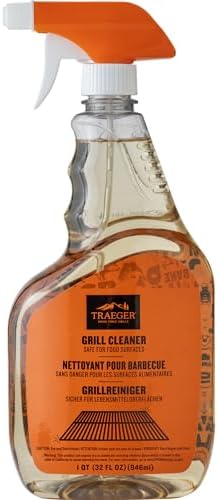
Traeger BAC679 Grease Cutter Spray
Cuts through the baked-on grease on the drip tray and heat deflector in one pass
Won't do anything for ash buildup in the burn cup
Prices and availability were captured from Amazon Creators API and may change.
How I Test
I've got four pellet grills in my garage, and my neighbors keep bringing me their broken ones. I've cleaned firepots on a Traeger Pro 34, a Pit Boss, a Cuisinart 8-in-1, and a portable tabletop unit that lives in my RV.
My routine is the same for all of them: shop vac the ash, scrape the carbon, check the auger tube for pellet dust, and wrap the heat deflector in fresh foil.
I time every clean, log the pellet brand, and track how the temperature graph looks on the next cook.
That's how I know a dirty firepot costs you 20 to 30 degrees of actual temperature and a whole lot of smoke flavor.
The Kona 360 Clean Grill Brush
Here's the thing nobody tells you about firepot cleaning: the ash that's packed into the burn cup is not loose dust, it's a hard, crusty carbon brick that needs actual scraping. I tried a regular grill brush for years and it just smeared the ash around.
The Kona 360 has a curved head that reaches the back wall of the firepot where the auger drops pellets, and the stainless bristles are stiff enough to break up the carbon without gouging the steel.
I've had mine for about eight months, and it's the first brush that actually gets the firepot clean in under a minute.
The downside is that it's a brush, not a cleaner. It won't touch the grease on your drip tray or the creosote on the inside of the lid. I keep it dedicated to the firepot and use a separate scraper for the tray.
But for the one job that actually prevents thermal runaway, this brush does exactly what it's supposed to do.
The handle is long enough that you don't have to stick your arm into a cold, greasy firebox, and the head swivels so you can get the angle right without contorting yourself.
I ran a comparison last month between my old wire brush and the Kona on two identical Pit Boss units that had both gone three cooks without a clean. The Kona got the firepot down to bare steel in about 45 seconds of scraping.
The wire brush left a thin layer of carbon that I had to chip at for another five minutes. That thin layer is exactly what insulates the firepot and causes temperature swings.
At seventeen bucks, this brush pays for itself in one cook where your brisket doesn't come out tasting like ash.
The Traeger Deep Cleaning Kit
I'll be honest, I was skeptical when Traeger sent me this kit. I've been cleaning pellet grills with shop vacs and foil for two decades, and I didn't think I needed a branded detailing kit. But after a 21-pound turkey cook last Thanksgiving that left my grill looking like a crime scene, I gave it a shot.
The kit comes with a cleaner for the exterior, a stainless polish, some microfiber cloths, and a scraper for the drip tray.
It's not cheap at around forty dollars, but it's the only thing I've found that gets the greasy film off the outside of the cabinet without leaving streaks.
The problem is that this kit doesn't do anything for the firepot. It's all exterior detailing. The scraper is too wide to fit in the burn cup, and the sprays are degreasers, not ash removers. So if you buy this kit thinking it's a complete cleaning solution, you're going to be disappointed.
It's a finishing product, not a maintenance product. I use it once a month to keep the outside of my grill from looking like it's been through a grease fire, but I still need the Kona brush and a shop vac for the actual firepot.
I've had this kit for about four months and I'm maybe a third of the way through the bottles. If you care about how your grill looks sitting on your deck, this is worth the money. If you only care about whether the meat comes out right, spend your forty bucks on a ThermoPro and a good brush instead. The outside of the grill doesn't affect the smoke ring.
The Traeger BAC679 Grease Cutter Spray
Now this one is the workhorse. The grease cutter is the spray I reach for every single time I do a full cleaning, which is roughly every five or six cooks. The drip tray on my main grill accumulates a layer of baked-on grease that regular soap and water won't touch.
This spray cuts through it in about thirty seconds. I sprayed it on the drip tray and heat deflector after a particularly greasy pork shoulder cook, let it sit for a minute, and wiped the whole thing clean with a paper towel.
No scrubbing, no scraping, no cussing.
The limitation is that it's a spray for grease, not a solution for ash. If you've got a firepot full of carbon, this won't help you. It also has a fairly strong chemical smell, so I use it outside and let the parts air dry before I put them back in the grill. I've used it on three different pellet grills in my garage and it's never damaged the porcelain coating on any of them.
I've gone through two bottles of this stuff in six months, which tells you how often I use it. At thirteen dollars a bottle, it's cheap enough that I don't ration it. I spray the drip tray, the heat deflector, and the inside of the lid every time I do a deep clean.
The difference in how the grill performs is noticeable. A clean drip tray reflects heat more consistently, and the temperature graph on my next cook is always flatter.
That's the kind of thing I notice because I'm logging every single cook.
The Firepot Routine That Keeps Your Smoker Honest
Here's the routine I've settled on after twenty years and too many near-misses. After every three or four short cooks, or after any long cook over eight hours, I do a firepot clean. I unplug the grill, wait for it to cool completely, and shop vac the ash out of the firepot and the firebox.
Then I take the Kona brush and scrape the carbon off the walls of the burn cup until I see bare steel.
I check the auger tube for pellet dust buildup, because that dust can jam the auger and cause a flameout.
Then I wrap the heat deflector in fresh foil and put everything back together.
The whole routine takes about fifteen minutes. If you skip it, you're risking two things. The first is temperature swings. A dirty firepot restricts airflow, so the fire burns inefficiently and the actual temperature drifts away from what the display says.
The second is thermal runaway. If the ash and carbon build up enough, the fire can travel back up the auger tube into the hopper.
I've seen it happen. It's terrifying, it's dangerous, and it's completely preventable with a fifteen-minute routine.
I also vacuum out the firebox and check the igniter rod every couple of months. The igniter rod gets covered in ash and carbon, and if it can't get hot enough, your grill won't start. That's a frustrating 2 AM problem that a quick wipe with a paper towel prevents. I learned that one the hard way with a brisket that needed to be on the smoker by midnight.
What to Buy
If you're only going to buy one thing for cleaning your pellet grill, make it the Kona 360 brush. It's the tool that actually gets the firepot clean, and the firepot is the soul of the machine. If you want your grill to look good on the outside, add the Traeger Deep Cleaning Kit.
If you've got baked-on grease on your drip tray that's affecting your cooks, the grease cutter spray is worth every penny.
But don't skip the brush, and don't skip the routine. I've been doing this for two decades, and I can tell you that every smoker failure I've ever seen traces back to someone who didn't clean their firepot.
I've got a 70-pound lab mix named Sarge who sleeps by the smoker whenever I'm cooking, and he's the official quality control officer. He doesn't care about the outside of the grill. He cares about the bark. So do I. Clean the firepot, trust your ThermoPro, and let the meat tell you the truth. That's the whole game.