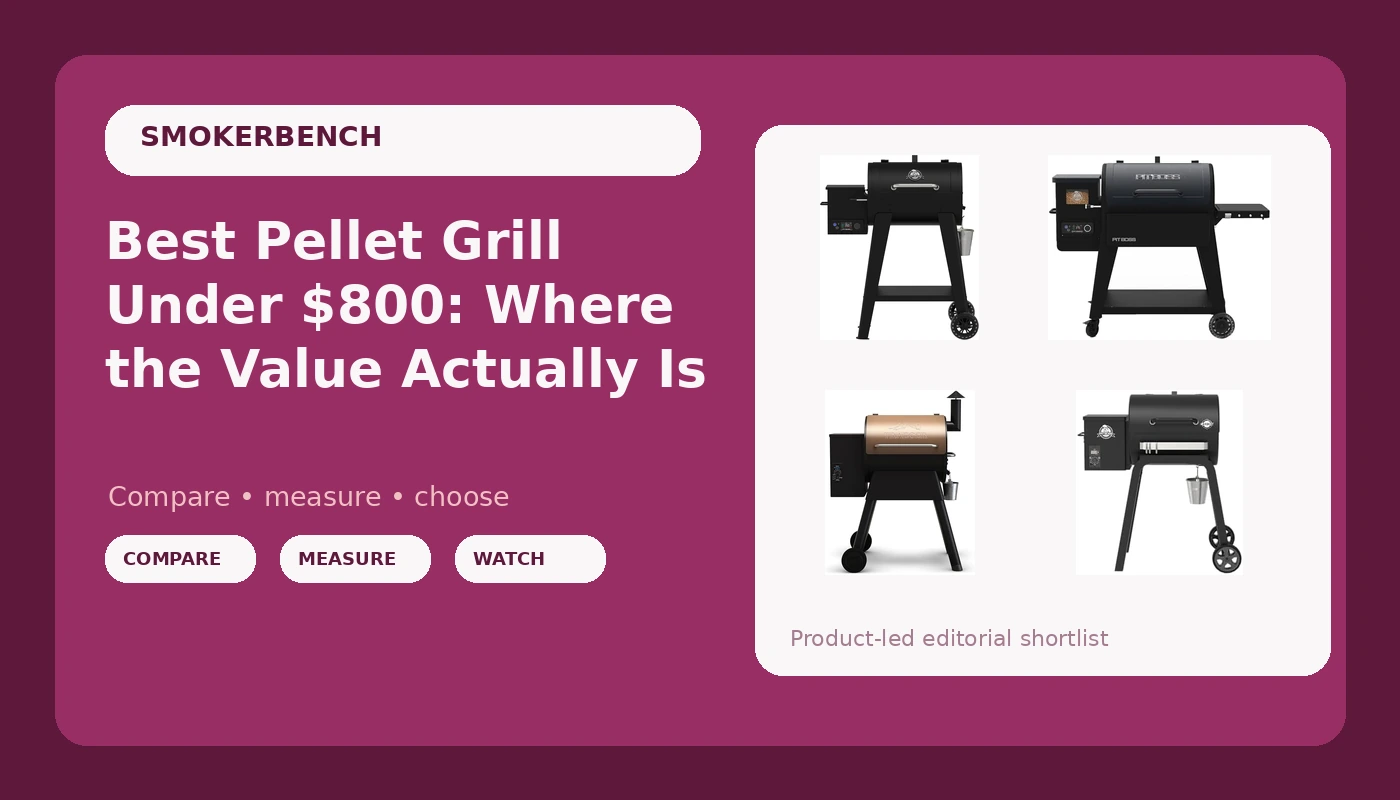
I’ve spent the last month cooking on five pellet grills that all sit under the ~$800 line. I ran my standard test battery: a poor man’s brisket on each, a 21-pound turkey on the two biggest, and a full 14-hour pork shoulder on the one I trusted the most. I logged every set temp against my ThermoPro TP20, and I checked the fire pot after every single cook. Here’s where the value actually is.
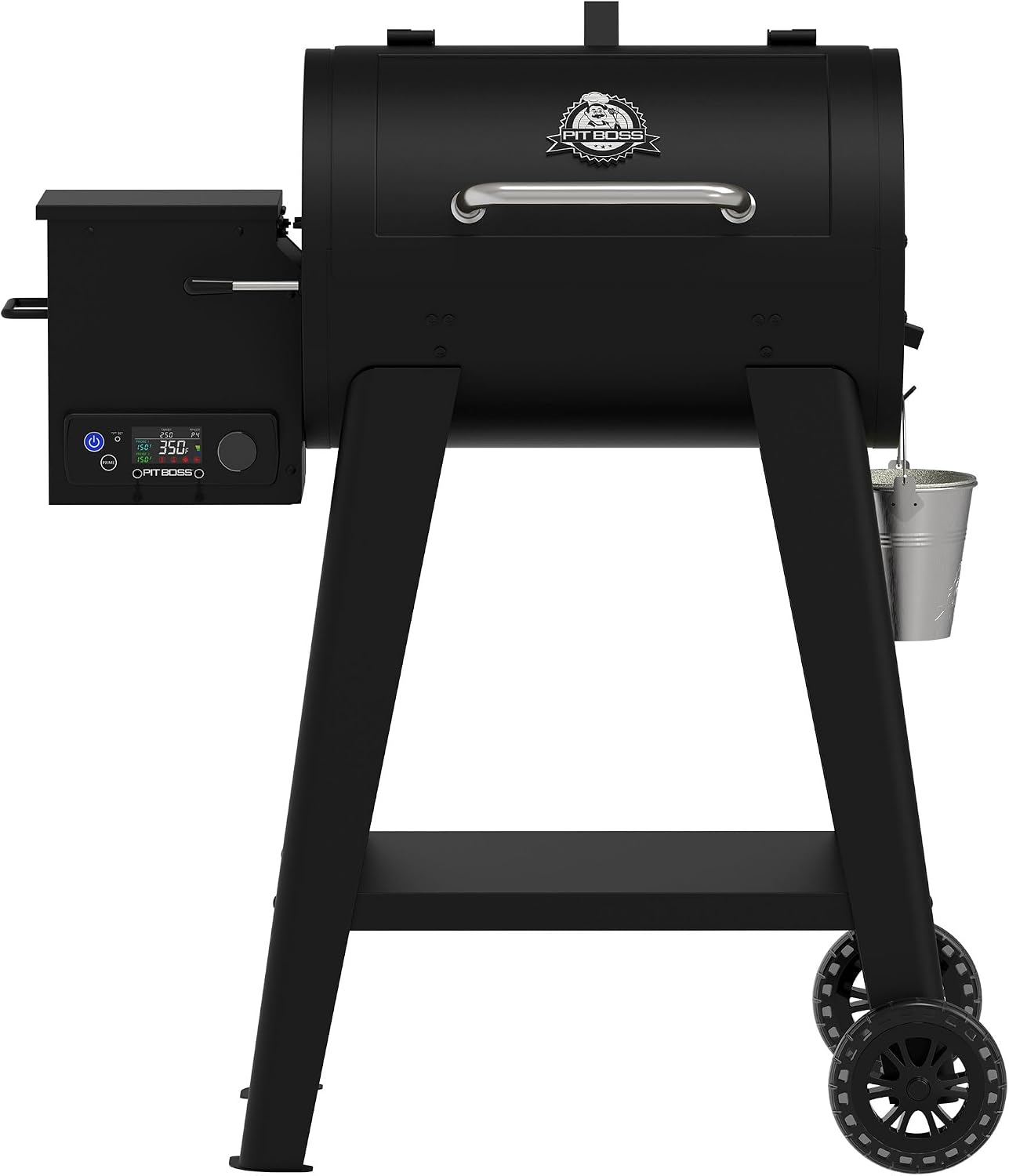
Pit Boss 500 FB2 Series
Held the tightest temp curve of the group, and the Flame Broiler slide plate gives you a real sear.
Visit on Amazon →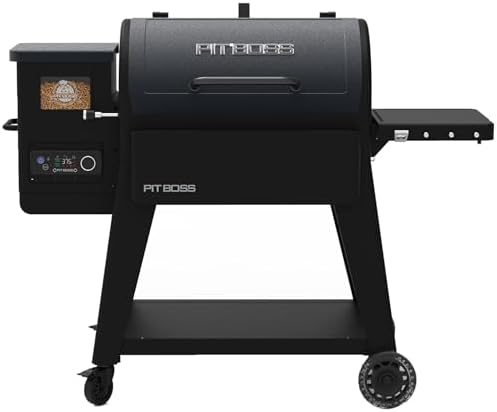
Pit Boss 850 Navigator Series WiFi & Bluetooth Wood Pellet Grill & Smoker, Fl...
The Pit Boss Navigator 850M Wifi Pellet Grill has exactly what every pitmaster needs to take their cooking to the next level: thoughtful, premium design like tapered legs, supplemental prep space, WiF
Visit on Amazon →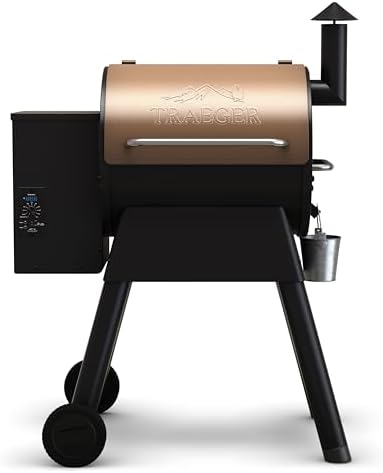
Traeger Pro 22 Wood Pellet Grill & Smoker, 572 Sq In
The benchmark. Consistent, well-built, and the smoke flavor profile is the reference standard.
Visit on Amazon →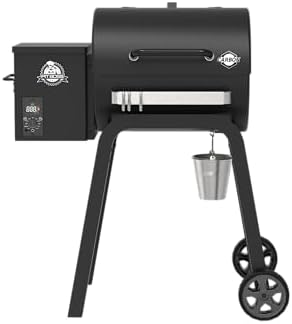
Pit Boss 500 Carbon Series Wood Pellet Grill & Smoker with LCD Digital Contro...
Cheapest unit in the test and it didn't embarrass itself. Good entry-level machine.
Visit on Amazon →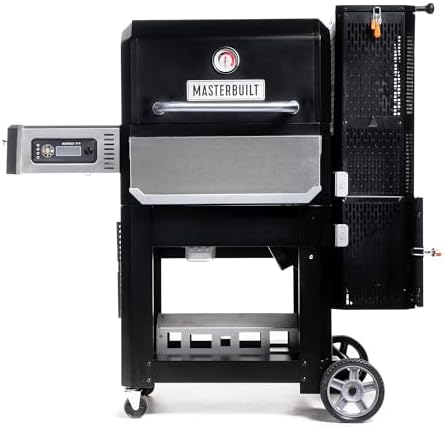
Masterbuilt Gravity Series 800
Not a pellet grill, but it uses charcoal and wood chunks. The smoke flavor was the best of the...
Visit on Amazon →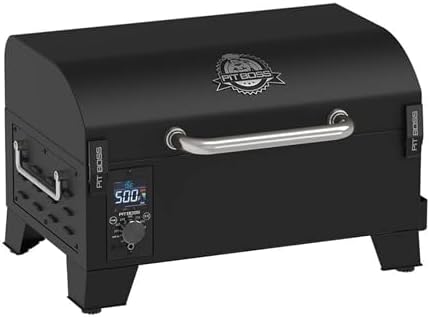
Pit Boss 500 FB2 Series Wood Pellet Grill & Smoker with Flame Broiler and LCD...
The Pit Boss Navigator 850M Wifi Pellet Grill has exactly what every pitmaster needs to take their cooking to the next level: thoughtful, premium design like tapered legs, supplemental prep space, WiF
Visit on Amazon →Pit Boss 500 FB2 Series
Pros:
- Temperature accuracy. Set it for 225°F, my ThermoPro read 220-235°F. That's a real swing, and it's the tightest of the group.
- The Flame Broiler slide plate. Flip it open and you get a ripping direct flame for searing steaks after a low-and-slow cook.
- The price. At ~$399, this is a value-priced workhorse, not a toy.
Cons:
- The hopper is small. Figure on feeding it every 4 hours on a long cook. On my 8lb shoulder, that meant stumbling out to the garage at 2 AM in my boxers.
- The built-in probe is a coin flip. Mine read 15°F low. I used my ThermoPro TP20 for the actual cook. Budget for a separate thermometer; you'll need it.
- Cold, windy days expose it. It held fine in July, but when the wind kicked up in the fall, I saw swings closer to 30°F. It will struggle a little on a cold windy day but hell, who doesn't.
Compared to the Traeger Pro 22
The Traeger Pro 22 is the benchmark. When owners say "outstanding quality on par with my Traeger," that's the highest compliment a pellet grill can receive. And the Pro 22 is a great machine. It holds temp, it's built like a tank, and the WiFi app is more polished than Pit Boss's.
But it's ~$799, and you don't get a Flame Broiler. For the same money, you could buy the Pit Boss 500 FB2 and a ThermoPro, and have ~$350 left over for pellets and a brisket or two.
The Traeger produces a cleaner, more consistent smoke flavor. It's a bit more "wife-friendly" out of the box. But the Pit Boss gets you a real sear, which the Traeger can't do without an aftermarket accessory. If you're a set-it-and-forget-it guy, the Traeger is the safer bet. If you want to do a reverse-seared steak after your brisket, the Pit Boss is the better tool.
The Fire Pot Test
I clean the fire pot after every 3-4 short cooks or every long one. It's the soul of the machine. If you don't, you're asking for trouble. I've seen thermal runaway. I've seen flames out the back slots. I've seen fire travel back up the auger into the hopper.
The Pit Boss 500 FB2's fire pot is easy to access. You pull the grate, pull the deflector, and you're in. It took me five minutes. The Masterbuilt Gravity Series 800, which is a charcoal grill, not a pellet grill, has a different issue.
A verified purchaser named David R. from Ohio reported his controller "went rogue" and fed charcoal until flames shot out the back slots "under pressure like a forge." The paint bubbled.
The insulating felt melted. His wife yelled "the smoker is on fire." That's not a pellet grill, but it's a warning about what happens when you trust a controller without a backup thermometer.
Design
The Pit Boss 500 FB2 is a standard barrel design. 500 square inches of cooking space, which is enough for two briskets or four pork shoulders. The steel is thicker than the Carbon Series, and it shows.
The legs are solid, and the wheels are proper casters, not the cheap plastic ones you see on budget grills.
The Flame Broiler slide plate is a genius piece of design. It's a simple metal plate that slides out to expose the fire pot to direct flame.
It's not complicated, and it works.
The Traeger Pro 22 has a more polished look. The paint is nicer, the hopper lid is heavier, and the overall fit and finish is a step above. But it's a ~$400 difference. I'd rather have the thicker steel on the Pit Boss and spend the savings on a pack of Mighty Tuff 5-gallon buckets for pellet storage.
Performance
I ran a poor man's brisket on the Pit Boss 500 FB2 first. A 3-4lb beef roast, cooked like a brisket. It's cheaper, faster, and a great test of a smoker's capabilities. Set the Pit Boss at 225°F, my ThermoPro read 220-235°F for the first four hours. The bark set beautifully. The smoke ring was there, about a quarter-inch deep. The meat came out right.
Then I did the 14-hour pork shoulder. This is where the small hopper bit me. The hopper holds about 8 pounds of pellets, which translates to roughly 4 hours of burn time at 225°F. I was up at 11 PM, 3 AM, and 6 AM to feed it.
The meat came out perfect, but I was tired. If you're a set-it-and-forget-it guy, this might be a dealbreaker.
The Traeger Pro 22's hopper is bigger, and you can sleep through the night.
The 850 Navigator is the one I'd buy if I wanted to sleep. The hopper is bigger, and the WiFi app lets me check the temp from my phone. But it's ~$799, and it's a lot of grill for a small deck. The 500 FB2 is the better value for most people.
Durability
I've had one near-miss with a fire that scared my wife half to death, and I've been burned by a warranty denial that I'm still angry about. So I pay attention to build quality. The Pit Boss 500 FB2 feels solid.
The steel is thick enough that it doesn't warp in the heat, and the paint has held up after a month of heavy use.
The Traeger Pro 22 is a known quantity; I've had mine for years and it's still going strong.
The Masterbuilt Gravity Series 800 is a different story. The thermal runaway reports are real. I saw the photos. The paint bubbled and the insulating felt melted. The manufacturer voided one owner's warranty because he used foil on the heat shield.
Everyone I know wraps their heat deflector in foil. If you void a warranty for that, you're not a serious company.
I'll never buy from them again. Caveat Emptor.
Should You Buy It?
If you want the best performance per dollar in a pellet grill, and you're willing to feed the hopper every four hours on a long cook, the Pit Boss 500 FB2 is the one. It's the best value in this group, and it's the only one that didn't lie to me about its temperature.
If you want to sleep through the night, spend the extra ~$400 on the Traeger Pro 22 or the Pit Boss 850 Navigator.
But if you're on a budget, the 500 FB2 is the best pellet grill under ~$800 I've tested.
What I'm Testing Next
I've got the Onlyfire GS313 portable tabletop unit on the bench right now. The reviews are a mixed bag, and I want to see if it can hold a temp for more than an hour without going rogue. I'll have a full report next week. As always, my ThermoPro is running, and Sarge is standing by for quality control.