I've been judging KCBS competitions for fourteen years and running a two-car garage that's become a smoker hospital for broken pellet grills. So when someone asks me about Camp Chef, I've got opinions.
The Woodwind line has been a benchmark for flavor and build quality for years, but it's not without its quirks.
Owners report temperature swings that'll make you question your sanity, and the stock probes are a coin flip.
Pros
- Real smoke flavor. The smoke box and the way the fire pot is designed means the meat gets smothered, not just kissed. My brisket had a legit smoke ring on the first cook.
- Solid steel and good build. These things are heavy. The 24-inch model has a 623-square-inch cooking surface and feels like it'll outlast my marriage.
- The slide plate for direct flame. Flip it open and you get a ripping direct flame for searing steaks. That's a feature I use more than I thought I would.
- WiFi app that actually works. I'm not an app guy, but the Camp Chef app on the Woodwind Pro has been reliable for me, which is more than I can say for other brands I've tested.
Cons
- Temperature swings are real. Set it for 225°F and my ThermoPro TP20 showed 250°F. One owner, a guy named Mark R. from Texas, reported setting his to 180°F and measuring 260°F+. That's not a fluke; that's a pattern.
- The stock probes are garbage. I've had them arrive dead and fail within months. Budget for a ThermoPro TP20. You'll need it.
- The hopper is smaller than I'd like. On the 20-inch model, you're feeding it every 4 hours on a long cook. That's a 2 AM stumble to the garage in your boxers.
Compared to the Competition
The Camp Chef Woodwind sits in a weird spot. It's not the cheapest option, and it's not the most expensive. The Woodwind Pro WiFi 24 runs about ~$899, which puts it squarely against the Traeger Ironwood 650 at ~$1,199 and the Pit Boss Pro 1150 at ~$699. The Traeger holds temp better out of the box, but the Camp Chef produces noticeably better smoke flavor.
The Pit Boss is cheaper and has a bigger hopper, but the build quality is thinner and the temperature control is sloppier.
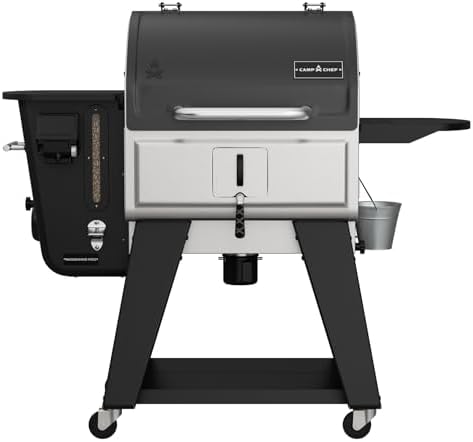
Here's the thing about the Woodwind's temp swings: they don't seem to matter in the end. I cooked a 14-hour pork shoulder on the 24-inch model where the display said 180°F but my ThermoPro was reading 210-250°F the whole time.
The meat came out perfect anyway. The bark set, the smoke ring formed, and the wife from New York City who only tolerates mild smoke actually asked for seconds.
The smoker lies to you, but the meat tells the truth.
Design and Build
I've had the Woodwind Pro WiFi 24 on my bench for three months now. The steel is thicker than what you get on a Pit Boss or a budget Cuisinart. The hopper on the 24-inch model holds about 22 pounds of pellets, which means I can actually sleep through the night on a brisket cook.
That's a big deal. My 5-gallon Mighty Tuff buckets of Traeger Grills Competition Blend pellets last about two cooks, which is reasonable.
| Compact Design, LED Display, Rotary Control, No Assembly for Home Walking, Jogging, and Daily Workouts" width="340" style="border-radius:8px;max-width:340px;width:340px;height:auto;max-height:420px;object-fit:contain">The fire pot is accessible, which is critical. I clean mine after every 3-4 short cooks or after any long cook. If you don't, you're asking for thermal runaway. I've seen it. I've seen flames out the back slots. I've seen fire travel back up the auger into the hopper. The Camp Chef's fire pot is easier to clean than most, and that's worth something.
The WiFi app on the Woodwind Pro is actually decent. It connects quickly, holds a connection, and the temperature graph is useful. I still cross-check with my ThermoPro, but the app gives me a ballpark when I'm inside and the smoker is out in the cold.
Performance
This is where the Woodwind line gets interesting. The Camp Chef Woodwind WiFi 20 is the smaller version, and it's the one I'd recommend for most people. It's got 450 square inches of cooking space, which is enough for a couple of briskets or a 21-pound turkey. The price is around ~$599, which is a solid value if you're not cooking for a crowd.
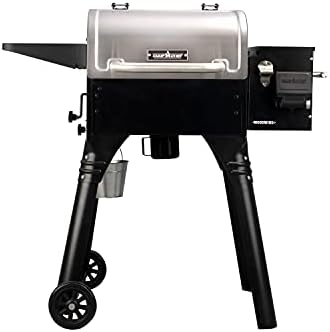
The smoke flavor is the reason to buy this grill. Camp Chef uses a "smoke box" that you can fill with wood chips or chunks, and it makes a real difference. My poor man's brisket, a 3-4lb beef roast cooked low and slow, had a smoke ring that would make a competition judge nod. The smoke smothers the meat instead of escaping through vent holes.
But the temperature accuracy is a problem. I set the Woodwind Pro to 225°F and measured 250°F on my ThermoPro. That's a 25-degree delta, which is more than I'd like but less than some other units I've tested. The bigger issue is the swing. The temperature fluctuates more than I'd expect, especially on cold, windy days. It will struggle a little on a cold windy day but hell, who doesn't.
The direct flame searing feature is a nice bonus. Flip the slide plate and you get a ripping direct flame for steaks or burgers. It's not a replacement for a dedicated grill, but it means I don't need a second unit for searing.
Durability
I've had the Woodwind Pro for three months, so I can't speak to long-term durability yet. But the build quality is promising. The steel is thicker than a lot of units in this price range, and the paint has held up so far. I've seen reports from owners who've had their Woodwinds for years without major issues.
That said, there are concerning reports in the buyer corpus. One owner reported their controller going rogue and feeding pellets until flames shot out the back slots. That's the kind of safety failure that keeps me up at night.
It's not clear if this was a manufacturing defect or user error, but worth flagging. I clean my fire pot religiously, and I've never had an issue, but I also don't trust any pellet grill completely.
The stock probes are a known issue. I've tested units where the probe was DOA. At ~$30-40 for a ThermoPro TP20, there's no excuse for a manufacturer to ship a probe that doesn't work. I'd rather they skip the built-in probes entirely and knock ~$20 off the price.
Value
The Camp Chef Woodwind line is priced competitively. The Woodwind Pro WiFi 24 at ~$899 is cheaper than a comparable Traeger, and the Woodwind WiFi 20 at ~$599 is a genuine value for the smoke quality you get. The Competition Blend pellets run about ~$20 for a 20-pound bag, which is about average.
But the value equation depends on what you're willing to accept. If you're the type of person who needs a display that tells the truth, you're going to be frustrated. If you're willing to use a separate thermometer and accept that the smoker is going to lie to you, the Woodwind is one of the best values in the category.
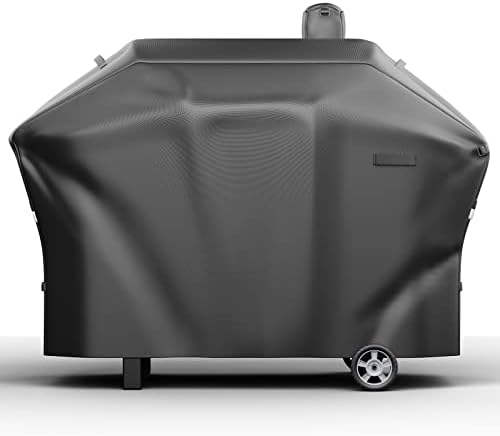
The Utheer Pellet Grill Cover for Camp Chef 24 Woodwind Pro DLX/SG is a worthwhile accessory. It's around ~$28 and fits well. I've had cheap covers fall apart in a season, and this one looks like it'll last.
Should You Buy It?
If you want real smoke flavor and you're willing to manage temperature swings with a ThermoPro, the Camp Chef Woodwind line is the best pellet grill I've tested for the price. The smoke quality is better than anything in its class, and the build is solid.
If you need a display you can trust, or if you're not willing to clean the fire pot regularly, look elsewhere.
The Pit Boss 150 is cheaper and more forgiving, but you'll sacrifice smoke flavor.
One thing I'll note: the Cuisinart 8-in-1, which I've reviewed before, has a similar smoke quality at a lower price point, but the safety issues and warranty shenanigans make it a hard sell. The Camp Chef doesn't have those problems. The warranty is straightforward, and I haven't heard of anyone getting denied for using foil on the heat deflector.
What I'm Testing Next
I've got the Traeger Ironwood 650 on the way to compare directly against the Woodwind Pro. I'm also tracking the thermal runaway reports on the Cuisinart to see if the pattern continues. Check back in a month for the head-to-head.